October 22, 2026
Condition 1 Combat Center: After School Confidence Builders
By @kylerzacl799
Confidence grows in layers, not in leaps. You see it in a child who stops fidgeting when the coach calls them to attention, or in a teen who meets your eyes after landing a clean combination for the first time. At Condition 1 Combat Center in Spring, Texas, that steady build is the point. The after school program is not a holding pen with uniforms, it is a structured path that teaches self-control, practical self-defense, and the habit of meeting standards. For families searching for martial arts classes near me that fit real schedules and real budgets, this is where the fitness grind meets character training.
Why after school martial arts works when it is done right
Most parents who tour our facility come with a simple problem statement. School ends at 3, work ends at 5:30, and the hours in between can either be productive or chaotic. An after school martial arts program can absorb that gap, but it has to do more than run the clock. The environment should be calm, consistent, and purposeful. Kids need to know what happens next every single day.
At Condition 1 Combat Center, the routine is predictable by design. We serve families from several nearby schools in Spring and Klein. The first half hour after arrival is for a snack and decompressing. Homework time is quiet, phones are away unless a parent has given permission for a specific task, and coaches circulate to keep kids on track. Then the mats open. The rhythm matters. Children switch from school brain to movement brain without losing focus, and coaches use that transition to set expectations for class.
The coaching philosophy: positive pressure, clear standards
Good coaching balances warmth and pressure. Too soft, and standards slip. Too harsh, and kids go through the motions without heart. Our instructors train that balance. They use clear commands, short demonstrations, and the same key phrases class after class so students know exactly what to do. Corrections are given in a 1 to 3 ratio to praise, not to sugarcoat mistakes but to mark progress. When a student earns a stripe for consistent effort on their front kick, they know what specific behaviors got them there.
I think of a second grader who joined with a shy posture and a habit of whispering. For the first two weeks, we kept her on the front row near the coach and assigned a veteran student as her partner. She mimicked more than she initiated. On week three, she called the count for the class on a drill, voice shaking at first, growing by the tenth rep. We did not gush. We told her she kept a steady pace and made eye contact. She left with a stripe. Quiet students need moments to step into responsibility, not just mat time. We build those moments deliberately.
On the other side, a restless fifth grader arrived with a constant need to move and a low threshold for frustration. Instead of fighting the energy, we channeled it. He carried the pads between drills and set cones for agility work. When he interrupted, he lost a turn. When he finished a drill without distraction, he earned a leadership minute calling out commands. Within a month his outbursts dropped. He still moved constantly, but with a job to do. The structure absorbed the energy.
What the kids truly learn
Martial arts offers a long list of promises. At Condition 1 Combat Center, we narrow it to five outcomes for the after school track: physical literacy, boundary setting, resilience under fatigue, practical self-defense, and respect for teammates.
Physical literacy comes from short, repeated patterns that build coordination. Think of a three strike combination on focus mitts, then add a step, then add a level change. Students feel how their hips drive power and how their breath supports rhythm. Boundary setting looks like the difference between touch contact and target contact, and the ability to stop on command. We explain consent on the mat in simple language. You do not grab anyone without permission. You do not keep going if your teammate says stop.
Resilience under fatigue is not about breaking kids. It is the simple, powerful experience of finishing a set even when legs burn. If a student succeeds at a 30 second plank on Monday, we log it and ask for 35 seconds the next week. Self-defense begins with awareness and posture. Younger kids practice verbal boundaries, keeping hands up without fists clenched, and breaking free from common grips. Older students learn angles, escapes, and when to run. Respect for teammates shows up in how we line up, thank our partners, and reset equipment. When mats look better at the end of class than at the beginning, we are winning.
The after school flow at a glance
Parents often ask for a clear picture of what their child does between the final bell and pickup. Here is the typical day, compressed into the parts that matter most.
- Arrival and check-in, with a quick wellness scan and a consistent greeting by name.
- Snack and homework block, quiet and supervised, with parents notified if assignments are incomplete.
- Warm-up and technical lesson, scaled by age and belt level, with safety rules re-stated every session.
- Drills and controlled sparring or pad work, emphasizing form first, speed second, power last.
- Cooldown, reflection, and parent pickup, with a coach available for a two minute progress update.
The routine remains constant, but content within each block changes week to week. Some days emphasize footwork, other days focus on grips and escapes. Novelty sits on top of structure, not the other way around.
Safety is not negotiable
A well run school looks safe before you even ask. Floors are clean. Equipment is where it should be. Coaches are on the floor and engaged, not on their phones. We follow age-appropriate contact rules and teach kids what those rules are. Sparring for younger belts, when introduced, is strictly controlled and often limited to reaction games with foam targets or no-head-contact touch drills. Protective gear fits, and we check it.
Coaches maintain CPR and first aid certification and carry supplies for minor issues like scrapes or jammed fingers. If a head bump occurs, we stop the action and follow a simple, conservative protocol: remove the student from contact for the day, notify the parent immediately, and advise a medical evaluation if any symptoms present. Expect a transparent incident report the same afternoon. Parents should never guess what happened, or learn about it at pickup without context.
We design the room to reduce preventable injuries. That means clear lanes read more between stations, no blind corners near heavy bag racks, and a rule that no one runs on the mat without a command to do so. It also means coaching patience. Kids want to throw hard. They learn to throw well first.
Age groups and skill tracks
A kindergartner should not train the same way as a seventh grader. Condition 1 Combat Center splits youth classes into roughly three tracks: early elementary, upper elementary, and middle school. Belt progressions are aligned, but requirements scale by age. Early elementary belts require mastery of basic shapes and commands. Upper elementary belts add combinations and one-step situational drills. Middle school belts bring in longer sequences, light contact, and decision making under time pressure.
Adults train on their own schedule with options for beginners martial arts classes, technique-focused evening sessions, and conditioning blocks through Condition 1 Fitness. Parents often ask if they can train while their child is in class. Many do. It turns pickup time into a productive hour, and it models the habit for the kids. We also keep time slots for weekend martial arts classes to accommodate shift workers and families with complicated calendars.
Private martial arts classes are available for students who need targeted help with a skill gap, confidence before a belt test, or extra polish before a tournament. One-on-one sessions are also valuable for students who struggle with sensory overload in groups. A short series of private lessons can teach the sounds, commands, and patterns they will encounter in group class, making the transition easier.
Building confidence you can measure
Confidence is not a mood. It is a record of small wins under pressure. We track those wins. Students earn stripes for punctuality and preparation in addition to technique. A fourth grader who arrives with their belt, mouthguard, and training journal three classes in a row has demonstrated a habit worth recognizing. We also measure repetitions. If the roundhouse kick looks better because the student did 300 quality reps over three weeks, we log it and the student can see a number next to a skill. Subjective praise feels nice. Collected reps feel undeniable.
Testing is not a performance for parents, it is an assessment. That means no surprise belts and no handouts because a quarter ended. If a student needs more time at a level, we tell the family exactly what is missing and how to get there. Sometimes it is a specific technique. More often it is consistent attention in class and follow-through on homework. Yes, homework. For younger students, that might be practicing a ready stance and three verbal boundary statements with a parent. For older students, it might be writing a short paragraph on what respect looks like at home and at school, then living it for a week.
For the family scanning options in Spring
If you are searching for Condition 1 Fitness classes in Spring TX and trying to separate marketing noise from substance, focus your tour and your questions. A clean facility and friendly staff are table stakes. What matters is how they run the hour and how they talk to your child.
- Ask to watch a full class, not a demo, and note how many minutes kids stay active versus waiting in lines.
- Listen for safety language. Coaches should state contact rules out loud every session, not just at orientation.
- Check the student to coach ratio and how partners are assigned. Mixed sizes require thoughtful pairing.
- Ask how belt testing works and what happens if a student is not ready on test day.
- Review the calendar for after school martial arts classes, family martial arts classes, and weekend options to see if your real life schedule can hold it.
Condition 1 Combat Center’s schedule includes dedicated kids martial arts classes after school, adult martial arts classes in the evenings, and beginners classes that steer clear of intimidation. Families often train together one night a week and split up on others. That mix is healthy. When a parent and a child share a form or a combination, dinner conversations change.
Affordability and value without surprises
Affordable martial arts classes do not mean bargain basement coaching. They mean clear prices, predictable add-ons, and value that you can feel each week. Expect a monthly membership for group classes, a uniform cost that is disclosed up front, and optional fees for belt tests spaced reasonably through the year. Beware of hidden costs like mandatory gear packages that show up after you sign, or automatic enrollments into tournaments you never asked for.
Condition 1 Combat Center keeps it simple. We post membership options on condition1combat.com and explain them in person. Families often pick a plan that covers two or three classes per week, which is enough frequency to build a habit without burning out. We offer discounts for siblings and a family plan when multiple members train, which turns martial arts into a shared investment instead of multiple isolated expenses. Private sessions are priced separately, and you only need them if a specific goal calls for it.
If you want to test the waters, ask about trial weeks and short term commitments. Monthly agreements give families flexibility. Annual contracts can save money for those ready to commit. There is no universal right answer. A parent with a rotating shift might need to keep options open, while a family with a stable schedule may prefer to lock in a lower rate.
Integrating goals at home and school
Martial arts pays off fastest when the mat and the living room speak the same language. We encourage parents to use the same three commands we use at the start of class: ready stance, eyes up, listen. Before homework, try it. Before chores, try it. Consistent cues lower the friction of transitions.
We also keep light communication flowing. Coaches are available for a minute at pickup with a specific note, not just a thumbs up. You might hear that your child led stretches, or that we are working on keeping hands up during pad work, and that a few minutes of mirror practice at home would help. For older kids, we invite them into the conversation so they practice owning their development.
Teachers in Spring ISD and Klein ISD have told us they notice the change when students learn to reset after a mistake. We teach a reset cue on the mat, a simple breath and stance change, and we ask families to mirror it at home. When a child drops a glass or gets a low quiz grade, the first move is not to spiral, it is to reset. Then we act. That single habit builds resilience faster than any speech about grit.
Adults benefit too, especially beginners
Adults need permission to be beginners. That first step onto the mat takes nerve, especially for someone who has not trained since high school. Our adult martial arts classes create room for that step. Technique blocks split by level keep the room safe and engaging. Beginners work fundamentals, footwork, and pad work at an intensity that builds confidence without risking injury. Advanced students get their volume in, but not at the expense of the new crowd. That is a coaching choice, and it matters.
Condition 1 Fitness runs parallel conditioning classes in Spring TX for adults who want strength and cardio that complement their martial arts training. The crossover helps. Grip strength, hip mobility, and trunk stability make kicks and clinch work safer. Weekend martial arts classes round out the week for those who cannot make weekday evenings. If your schedule is squeezed, ask about early morning open mat sessions. A quiet hour on the bag before work resets the whole day.

Community over bravado
The best local martial arts classes feel like a community center that happens to teach punching and kicking at a high level. You hear names. You see older students helping younger ones tie belts. Families stick around after class, not because they have to, but because they like talking with coaches and other parents. Condition 1 Combat Center hosts anti-bullying workshops during the fall and back-to-school season, open to the community. We keep tournament participation optional, and when students choose to compete, we set clear expectations about sportsmanship. Winning is enjoyable. Composure is required.
We also make space for service. Around the holidays, the team organizes a coat drive and invites students to help with sorting and distribution. It is not a marketing event. It is a habit that tells kids something about who they are becoming. Strength serves.
Practical notes on curriculum
Parents often ask what styles we teach. The youth curriculum borrows the discipline and structure of traditional martial arts with the practicality of modern self-defense. That means stances and forms for balance and coordination, pad work and reaction drills for timing, and situational training that teaches kids when to disengage. We do not sell invincibility. We teach students to read a room, set boundaries early, and run when running is the smart move.
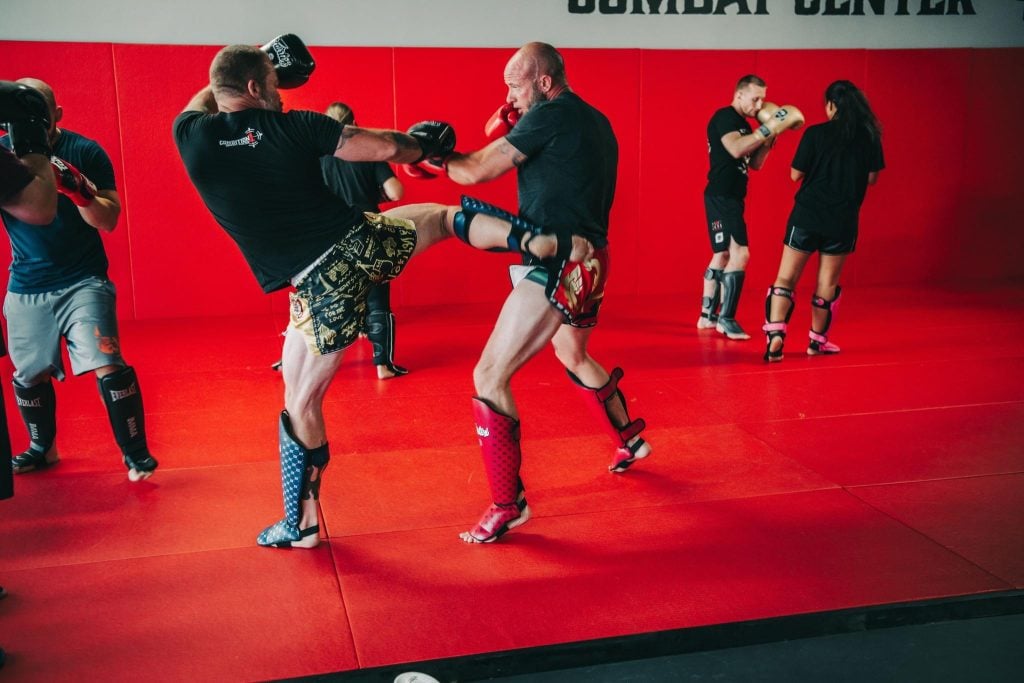
For teens and adults, we add clinch fundamentals, basic wrestling entries, and ground escapes, scaled to maturity and experience. Striking includes jab-cross-hook combinations, low kicks, and defense that keeps the head safe without turning the back. Beginners who arrive hesitant about contact find that levels are clear and pressure is introduced gradually. You will not get thrown into hard sparring just because you showed up.
What sets Condition 1 apart for families
Plenty of schools can teach a clean roundhouse. The difference is in the small systems around the technique. We log student progress and behaviors. We communicate promptly with parents. We run group classes that keep kids moving and thinking instead of standing in lines. We hold adults to standards without posturing. And we take safety so seriously that kids can relax enough to learn.
Condition 1 Combat Center is local, which matters more than most people think. A program that is five minutes from home gets used. One that is 25 minutes away becomes a stress point. If you are near Grand Parkway and FM 2920, the drive is easy. If you want to combine martial arts with conditioning, the Condition 1 Fitness schedule layers in smoothly. Many families choose a mix that fits their week: after school martial arts classes for the kids, a parent session in the evening, and a weekend martial arts class together.
How to start, simply
Getting started should take minutes, not days. Visit condition1combat.com to see current schedules and options for kids martial arts classes, adult martial arts classes, beginners martial arts classes, and family sessions. You can register for a trial directly online or call the front desk to ask specific questions about school pickup, homework time, or equipment. If you are price shopping, compare not just monthly dues but also the value of a consistent routine that your child actually enjoys and attends.
If you prefer to test the fit in person, stop by during a class window and watch. Notice the details. Look for smiles during drills, not just at the end. Look for coaches who give names to mistakes and names to wins. Ask about next steps, gear, and how we ease the first week for kids who feel nervous. The first day matters. We make it count.
Confidence grows in layers. Class by class, rep by rep, kids learn to be comfortable in their bodies, clear with their words, and respectful in their actions. Parents see it at home when shoes get put away without a prompt and when homework starts without a standoff. That is the real product at Condition 1 Combat Center, not a belt on the wall. The belt follows the behavior. The behavior follows the system. And the system is built to serve families in Spring, Texas who want something better than busywork between school and dinner.
❧